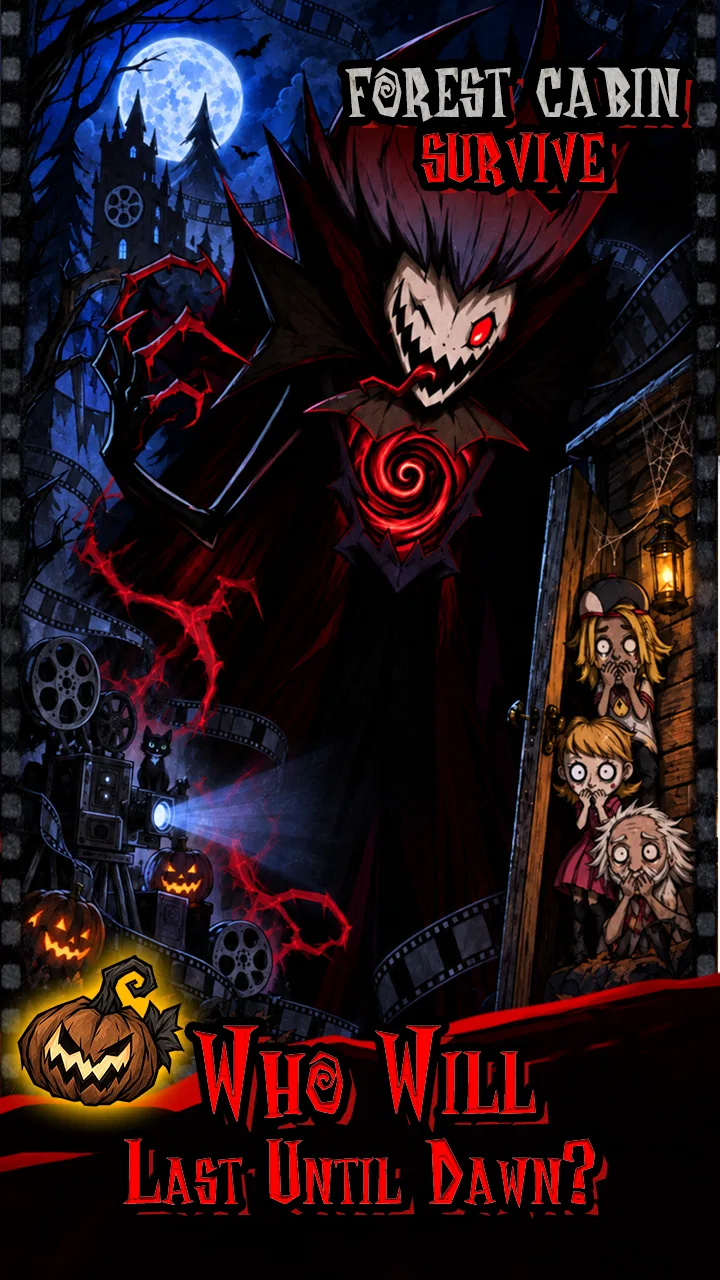
Forest Cabin: Survive
- 4.4
- Rating
- 500.00K
- Installs
- Free
- Price

 Analysis by App-foxy
I approached Forest Cabin: Survive expecting a focused strategy game built around one clear problem: keeping a woodland shelter standing while an enemy force applies pressure. That simple premise gives the game an immediately understandable goal, but the appeal depends on how much enjoyment you get from making careful decisions with limited room for error. I found it most interesting when I treated every improvement as part of a larger defense plan rather than as a quick upgrade to tap whenever resources appeared.
Developed by Harvest Star Game, this free strategy title places the cabin at the center of the experience. The store summary describes the objective as upgrading a forest cabin to withstand an enemy siege, and that framing matters because it sets the right expectation. This is not presented as a broad city builder or a relaxed decorating game. The cabin is the thing I kept thinking about: what should be strengthened first, what can wait, and how much preparation is enough before the next threat arrives?
The game is available for players aged Teen and runs on Android devices using version 8.0 or later. It launched on December 15, 2025, and the current version is 2.00.043. Those details make it accessible to a wide range of Android users, although the Teen rating is a useful reminder that the siege theme may not be aimed at young children. I would still check the on-screen content with a younger player rather than assuming that a cabin setting means a completely gentle experience.
You May Also Like

 Blood Strike: 2.5 Anniversary
Blood Strike’s Loadouts Turn Every Drop Into a Tactical Gamble
A close look at Blood Strike’s custom loadouts: how fast access to signature weapons reshapes its battle royale rhythm, rewards preparation, and narrows the gap between fights.

 Pandora - Music & Podcasts
Pandora’s Music Is Easy to Start, but Harder to Recover
Pandora’s strength is its low-effort path from a seed to a station. Its weak spot is how much confidence it asks you to place in connection, setup, and quiet recovery.

 8 Ball Pool
 Is Built on Rivalries, Rematches, and Routine
A close look at the rivalries, rematches, shared routines, and unanswered safety questions that turn a quick pool match into a persistent mobile community.

 Samsung Music
’s Quiet Strength Is Playing What You Already Own
Its reach comes less from spectacle than from dependable access to a personal library. That simplicity is both the app’s strongest retention engine and its ceiling.

 AccuWeather: Weather Radar
AccuWeather Review: A Quick, Clear Forecast for Everyday Decisions
For everyday plans, the best forecast is the one you can understand quickly. AccuWeather makes rain timing, radar, and local conditions easy to act on, with a few trade-offs.

 Hill Climb Racing
Why Hill Climb Racing Still Turns Crashes Into One More Run
A tiny car, a bumpy hill and one more upgrade: Hill Climb Racing keeps resurfacing because its simple chaos makes every near-miss feel personal.
More From Our News Desk
View All News


How Forest Cabin: Survive Feels Once the Siege Starts
Once the siege begins, I find the game’s small scale makes preparation feel more personal: each choice is about keeping this one shelter viable, not managing a sprawling settlement. I’d pay attention to whether the pressure encourages thoughtful adjustments or simply makes me spend in a hurry, because that distinction shapes the experience more than the premise alone. From there, the key question is how the game feels when I return for another session.
A small setting that makes every decision feel important
The strongest part of the concept is its scale. Defending a forest cabin feels more personal than managing a huge kingdom, because a mistake seems connected to one place that I have been improving piece by piece. That gives ordinary strategic choices more weight. A decision that might feel routine in a large empire game becomes easier to understand here: I am not expanding everywhere; I am trying to make one vulnerable position last.
That focus also makes the game easier to pick up than many heavier strategy alternatives. I do not need to learn an enormous political system or memorize a long list of factions before understanding the basic purpose of a session. The central question remains close at hand: how can I turn the cabin into a reliable defense before the enemy overwhelms it?
At the same time, a compact premise can become repetitive if the available decisions do not keep developing. This is where my enjoyment depended on the rhythm of progress. If I was making meaningful choices about preparation, the cabin felt like a puzzle. If I was simply waiting for enough resources to repeat the same improvement, the pressure became less satisfying and more like a timer placed between actions.
Progress works best when I plan before reacting
My most useful habit was resisting the urge to spend every available resource immediately. In a siege-focused game, a visible upgrade can be tempting because it produces an instant sense of progress, but the better question is whether that improvement solves the next likely problem. I found it more rewarding to keep a small reserve and think one step ahead instead of treating each resource gain as permission to upgrade at once.
This creates a practical difference between a first playthrough and a more deliberate one. Early on, I naturally reacted to whatever looked most urgent. Later, I paid more attention to timing. An upgrade made shortly before pressure arrives can be more valuable than the same upgrade purchased too early, especially when spending leaves the cabin unprepared for an unexpected turn. That timing trade-off is one of the game’s more interesting lessons.
A useful everyday scenario is a short evening session after work or school. I might have only a few minutes and want a game that gives me a clear objective without requiring a long campaign commitment. Forest Cabin: Survive fits that mood when I can make one or two thoughtful decisions, check whether the shelter is ready, and stop before rushing into a poor choice. It is less suitable when I want a purely relaxing game with no pressure hanging over each improvement.
Three habits that make the strategy clearer
First, I recommend separating preparation from emergency spending. When the cabin is already under immediate threat, it is easy to use everything on the most obvious response. That may solve the current problem while leaving no flexibility for what follows. Keeping some resources uncommitted gives me options, even when the game makes that patience uncomfortable.
Second, I would avoid judging an upgrade only by how impressive it looks at the moment I buy it. The better test is whether it changes the cabin’s ability to survive a sequence of threats. A modest improvement that supports several future decisions can be more useful than a dramatic purchase that helps only once. This is a small but important shift from collecting upgrades to building a defense plan.
Third, I found it helpful to treat failed attempts as information rather than immediately trying to copy the same approach. If a defense collapses, I would look at the point where my plan became inflexible. Did I spend too early? Did I leave no reserve? Did I focus on a visible weakness while ignoring the broader situation? That review process gives the game more depth than simply repeating an action until it works.
Where the pressure can become friction
The same siege tension that makes the game engaging can also narrow its audience. Players who enjoy gradual building, decoration, or open-ended experimentation may find the enemy pressure restrictive. The cabin is not just a project to improve at my preferred pace; it is a structure being tested. That means even a good plan can feel interrupted when the game demands immediate attention.
I also would not choose this as my first recommendation for someone looking for a deep, long-form strategy simulation. Its appeal comes from the concentrated cabin-defense idea, not from the promise of a massive management sandbox. People who prefer detailed diplomacy, expansive maps, or complex economy systems may find a traditional strategy title more satisfying.
Spending and the question of fairness
Forest Cabin: Survive is free to download, but it includes in-app purchases priced from $0.99 to $99.99 per item. That range is important for anyone deciding whether to try it. I can discuss the existence of optional spending and the need to watch a purchase budget, but I would not assume that paying guarantees a particular outcome or that every player will encounter the same pressure in the same way.
For me, the fairest way to approach the game is to decide on a personal spending boundary before beginning. The cabin-defense structure can make a purchase feel urgent because the whole point is surviving the next threat. Setting a limit in advance helps separate a considered decision from a reaction to pressure. I would also involve a parent or account holder when a Teen-rated game is being used on a shared device, particularly because individual items can reach a high price.
I cannot honestly label the game pay-to-win from the purchase information alone. The available details establish that purchases exist and cover a wide price range, but they do not establish exactly what each item does or how strongly spending affects progress. That distinction matters. A fair review should not turn the presence of purchases into an accusation without knowing their precise role.
What I can say is that spending may change how comfortable the progression feels, depending on the items offered during play. If purchases reduce waiting or help recover from mistakes, players who avoid spending may experience a slower route. If they are mainly optional conveniences, the impact may be smaller. I would therefore play for a while without buying anything and judge whether the core decisions remain enjoyable before considering a purchase.
What I would want to understand before committing
A few practical questions remain important for a new player. The first is how much variety appears after the basic cabin-defense loop becomes familiar. The premise is strong enough to attract attention, but long-term value depends on whether later play asks for new kinds of planning rather than simply larger versions of the same problem.
The second is how clearly the game communicates the consequences of an upgrade. Strategy becomes frustrating when I cannot tell why a choice worked or failed. I want to understand whether the cabin survived because of a deliberate decision, because of accumulated strength, or because the situation happened to be favorable. Clear feedback would make experimentation worthwhile; vague feedback would encourage guessing.
The third concerns the role of purchases in ordinary progress. Since the price range is broad, I would inspect each offer carefully instead of assuming that a low-cost item is automatically harmless or that an expensive one is automatically necessary. My recommendation is to treat every purchase as optional until the game itself proves that the base experience no longer feels complete without it.
Finally, I would consider the device and audience. Android 8.0 support is helpful for compatibility, but a supported operating system does not guarantee that every older phone will feel equally comfortable during play. I would also remember that the Teen rating makes this a better fit for older players who enjoy pressure and planning than for children seeking a calm cabin-themed game.
How it compares with familiar strategy alternatives
Compared with a conventional city builder, Forest Cabin: Survive has a tighter objective and less room for leisurely expansion. That can be a strength when I want a game with a defined problem instead of a long list of systems competing for attention. The trade-off is that players who enjoy designing a large settlement may miss the freedom and variety of a broader builder.
Compared with a traditional tower-defense game, the cabin premise suggests a more personal form of defense. I am thinking about the survival of one shelter rather than arranging a whole network of lanes. That focus may feel more approachable, although tower-defense fans who enjoy rapid placement and constant tactical movement may prefer a game built around those specific strengths.
Compared with a resource-management game, the siege gives resources a sharper purpose. I am not gathering simply to grow; I am gathering to withstand pressure. This makes spending decisions easier to understand, but it can also make the experience less forgiving. Someone who wants a peaceful management loop would probably be happier with an alternative that does not continually frame progress as preparation for an attack.
Who should try it, and who should skip it
I would recommend it to players who like compact strategy problems, visible defensive goals, and the satisfaction of improving one vulnerable location over time. It is especially appealing if you enjoy asking whether a resource should be used now or saved for a harder moment. The free entry point also makes it easy to test that central loop before deciding whether it deserves more of your time.
I would skip it if I dislike losing progress, making decisions under pressure, or monitoring optional purchases. I would also choose another game if my main interest is exploration, storytelling, decoration, or a large-scale civilization simulation. The cabin is the attraction, but it is also the boundary: the focused premise will not satisfy every strategy player.
Harvest Star Game’s title has attracted a modest but meaningful audience, with an average rating of 4.2 from around 2.8 thousand ratings and more than 100 thousand installs. Those figures suggest that the concept has found interest, while the rating also leaves room for individual taste and possible friction. I would read the overall response as encouragement to try it, not as proof that every player will enjoy the same pace or spending environment.
My trust verdict after weighing the trade-offs
My final view is cautiously positive. Forest Cabin: Survive gives me a clear strategic identity instead of hiding behind a vague theme: improve a cabin, prepare for pressure, and make each decision count. The best moments come when I plan ahead, preserve flexibility, and learn from a failed defense rather than blindly repeating it.
The main reason I would recommend trying it is that the free starting point lets the core idea speak for itself. I would not recommend buying anything immediately, and I would not promise that the progression or purchase balance will suit everyone. I would first play without spending, decide whether the defense decisions remain engaging, and only then consider whether an optional item is worth the cost.
My practical verdict is simple: try it as a focused strategy challenge, not as a relaxing builder or a guaranteed fair-play showcase. If the pressure of protecting one cabin sounds appealing, this is a worthwhile game to test. If you want complete freedom, a calm pace, or fully understood spending rules before you begin, wait until the opening experience answers those concerns for you.
FAQs for Forest Cabin: Survive
01What is the main objective of Forest Cabin: Survive?
Forest Cabin: Survive is a survival simulation game where players must manage resources, craft tools, and build shelters to withstand the harsh wilderness. The primary goal is to survive for as long as possible by effectively managing your character’s hunger, thirst, and health while exploring the mysterious forest.
02Is Forest Cabin: Survive available offline?
Yes, Forest Cabin: Survive can be played offline. This makes it convenient for players without a constant internet connection to enjoy the game. However, certain features, such as leaderboard rankings or special events, may require an internet connection to access.
03What platforms is Forest Cabin: Survive available on?
Forest Cabin: Survive is available for both Android and iOS devices. You can download it from the Google Play Store for Android users or the Apple App Store if you have an iOS device. The game is optimized for mobile devices to ensure a smooth gaming experience.
04Are there in-app purchases in Forest Cabin: Survive?
Yes, Forest Cabin: Survive offers in-app purchases. Players can buy various items or premium currency to enhance their gaming experience, such as special tools, resources, or cosmetic upgrades. However, the game can be played and enjoyed without making any purchases.
05What age group is Forest Cabin: Survive suitable for?
Forest Cabin: Survive is suitable for players aged 12 and above. The game includes survival themes and mild violence as players navigate the wilderness and face potential threats. Parents are encouraged to review the content to determine its appropriateness for younger players.
Pros
- Immersive graphics enhance gameplay experience.
- Engaging storyline keeps players hooked.
- Variety of challenges to test survival skills.
- Intuitive controls make navigation easy.
- Regular updates with new features.
Cons
- In-app purchases can be expensive.
- Occasional lag on older devices.
- Limited offline gameplay options.
- Some puzzles may be too challenging.
- Battery consumption is relatively high.

Forest Cabin: Survive
Gallery